Jacob Green
Quite fond of combinatorics, dynamical systems, and reinforcement learning—usually writing the code in Python or Rust. I also dabble in some history, though I can't profess any competancy here.
For a copy of my CV, please email me. I’m always keen to hear about interesting problems and, when warranted, happy to discuss them over a call.
Open Source Contributions
Attrax
Attrax (Author)
A JAX-based python library providing the identification of attractors, along with their basins of attraction, for dynamical systems $\dot{\boldsymbol{x}} = \boldsymbol{f}(\boldsymbol{x})$ via
recent developments by Datseris and Wagemakers.
NOTE: Currently unreleased. Should have v0.1.0 up in the next couple of weeks just finishing a few things on my end.
British Mathematical Olympiad Solution Compendium

British Mathematical Olympiad Solution Compendium
An assortment of solutions to older British Mathematical Olympiad questions I typed up some years ago. Geoff Smith told me to stop because it would hurt his book sales, and by a questionable induction the UK Maths Trust, so I obliged.
I'll note I skipped all the geometry questions. Olympiad geometry, unless of a combinatorial flavour, tends to be extremely boring to me. There is also a "skill issue" element, left to be quantified by the reader.
Expositions
Tutorials
Reinforcement Learning
We go into further mathematical depth than standard texts, such as Sutton's Introduction to Reinforcement Learning, and as such expect a greater deal of mathematical maturity. I try to write in a more conversational style, both to appease Socrates and to capture that tutorial feeling. I may record some seminars around this content if I find the time.
Currently writing tutorial 2: On dynamic programming. This covers the dynamic programming formulation of RL,
Bellman's equation, and the relevant ties with the Banach Fixed Point theorem.
FAQ:
Q: What are your credentials? Why should I listen to you?
A: Appeal to authority.
Q: Why not read one of the many books on RL?
A: Survivorship bias.
Q: I've already been reading Sutton, why should I switch to your tutorials now?
A: Sunk cost fallacy.
Combinatorics
Sum-Free Subsets - The Erdős Way

Swiss Subsets
Swiss Subsets
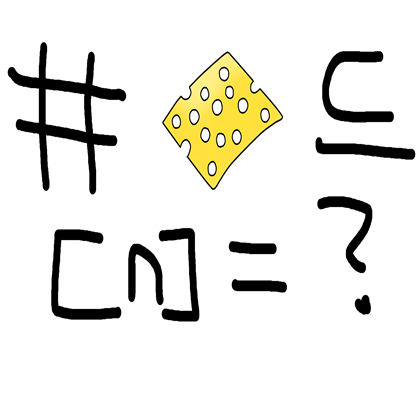
I lost over an hour of my life to this problem from 102 Combinatorial Problems From The Training Of The USA IMO Team. , so I thought it would make for a good excuse to write an exposition of the form "heres how to solve a hard olympiad problems".
Thesis
Masters
Masters Thesis
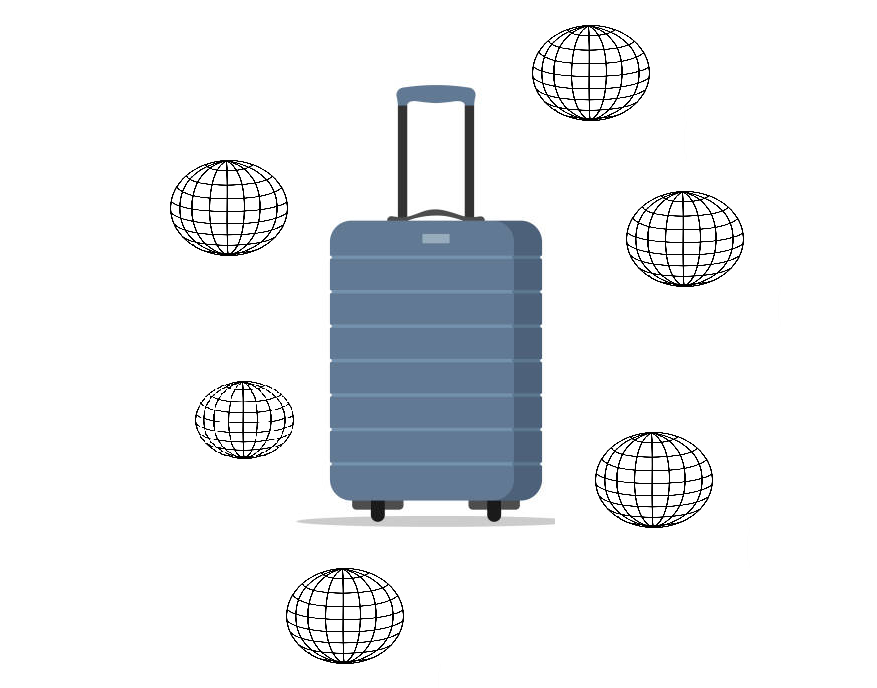
Mirroring the work of Campos, Jenssen, Michelen and Sahasrabudhe, we exhibit the existence of a sphere packing density $\Omega(2^d d \log d)$ in $\mathbb{R}^d$. We build upon their work in three key ways: (1) Providing explicit bounds for large fixed $d$ (2) Generalising arguments by considering packings in dilations of a convex body.
It is worth noting I had these ideas independently, leading to novel existence proofs of a packings densities $\Omega(2^d)$ and $\Omega(2^d d)$ in $\mathbb{R}^d$. As I later found out, the underlying idea (using independent sets and the AKS bound) is akin to that of Krivelevich, Litsyn and Vardy, though the random geometric graph formulation was independent—inspired by the work of my advisor Mathew Penrose. My advisor compared this thesis with Captain Scott's last march. I'm inclined to agree.
Mere months later Klartag exhibited packings of density $\Omega(2^d d^2)$. Well done Klartag!